
How to Pick the Perfect Bass for Any Track
The bass is one of the core foundations of electronic dance music, so knowing how to pick the perfect bass is essential.
Get it right, and your track feels powerful, deep, and professional. Get it wrong, and even a great idea can completely fall apart.
In this guide, you’ll learn how to pick the perfect bass for your track. We’ll break everything down in a simple, practical way—no overcomplication.
You’ll discover the main types of bass, how to choose the right one for your track’s vibe, how to layer and process bass properly, and how to avoid common stereo mistakes.
Why Bass Choice Matters So Much
A bass sound can be technically “good” but still be completely wrong for a track.
That usually happens when the bass doesn’t match the vibe, rhythm, or energy of the music. The goal isn’t to find the best bass sound—it’s to find the right bass sound.
Once you understand how bass works in different styles of EDM, choosing the right one becomes much easier.
The 4 Main Bass Categories in EDM
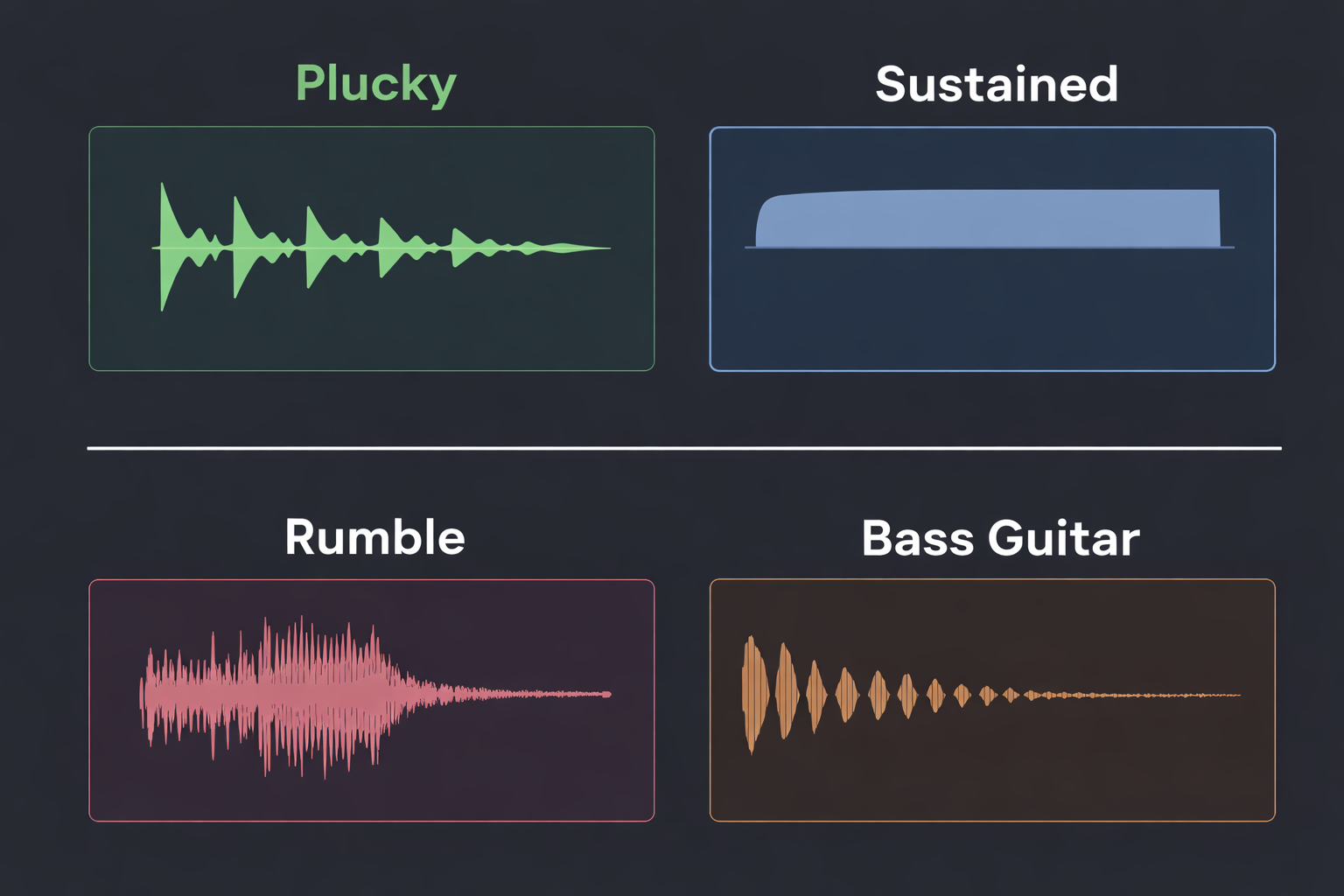
Most bass sounds in electronic music fall into one of these four categories. Some tracks use just one, while others combine two or more.
1. Plucky Bass
This is the most common type of bass in dance music.
Each note is short and clearly defined. One note finishes before the next begins.
Plucky basses work especially well in house, tech house, and fast genres like drum & bass.
2. Sustained Bass
A sustained bass holds the note until it changes.
This type of bass creates a smooth, rolling foundation and is common in melodic house, techno, and progressive styles.
3. Rumble Bass
The rumble bass is very genre-specific, especially in techno.
It’s usually created by processing a kick with reverb and distortion, then shaping it into a low, rolling bass.
4. Bass Guitar
Some tracks use real or sampled bass guitar instead of a synth.
For realistic results, it’s best to use high-quality sample libraries rather than trying to recreate a bass guitar with a synthesizer.
You can also combine bass types. For example, a sustained bass in the verse and a plucky bass in the drop.
Preparation: Setting Yourself Up for the Right Choice
Trust Your Musical Instincts
The more music you actively listen to, the better your ability will be to pick the perfect bass.
Reference tracks are incredibly important. They show you what kind of bass works for a specific genre and emotion.
Leave Room for Experimentation
Some of the most iconic bass sounds came from happy accidents.
Experiment with different synths, effect chains, modulation, and routing. Just remember—if a sound doesn’t support the vibe, save it for another project.
Use Presets and Sample Packs
Starting from a preset is often the fastest and most creative option.
High-quality presets help you stay in flow and make better decisions quickly. You only need one or two solid synths to cover most styles.
Vibe and Track Hierarchy
The vibe of your track is your guiding light.
Every decision—including bass choice—should support the emotion and energy you’re trying to create.
A bass might sound great on its own but still be wrong if it fights the rest of the arrangement.
It’s a good idea to choose and lock in your bass early, even if you don’t start your track with it.
If you are unsure how to write catchy bass patterns, then look no further! This blog post has got you covered:
5 Bass Patterns Every Music Producer NEEDS to Know!
How to Choose the Right Bass for Your Track
Start by listening to reference tracks in your genre.
Then look at your own arrangement.
- If your melody is staccato, a sustained bass often works well.
- If your melody is smooth or legato, a plucky bass can add groove.
There’s no strict rule—just make sure everything supports the vibe.
Sub Bass vs Mid Bass
Another key decision is whether your bass should be purely sub-focused or include mid and high frequencies.
Deep, minimal tracks usually benefit from a clean sub bass.
More aggressive styles like slap house need midrange presence for punch and character.
Always consider what else is already filling the frequency spectrum.
Programming and Auditioning Bass Sounds
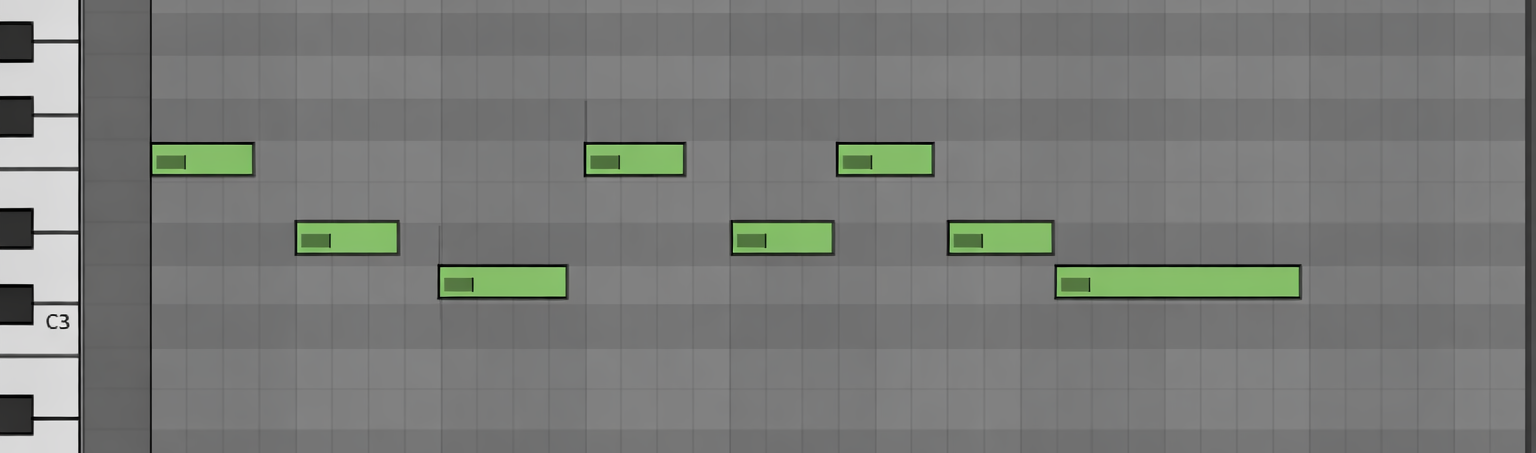
Once you’ve chosen the bass category, program the MIDI pattern using a simple sound.
Set your bass to monophonic in most cases. This prevents notes from overlapping and keeps the low end tight.
Pro tip: Program your bass line one or two octaves higher at first. It makes pitch mistakes easier to hear.
When auditioning bass sounds, always do it with the rest of the track playing.
Duplicate your bass track and test multiple sounds. A/B testing helps you find and pick the perfect bass.
Using Presets, ROMplers, and One-Shot Samples
Synth presets are often the best starting point for bass.
ROMplers like Kontakt or Nexus work in a similar way—load them in and audition sounds in context.
You can also use one-shot bass samples. Just make sure they’re tuned correctly.
If a sample isn’t tuned to C, transpose it until it matches a known reference note or use a tuner plugin.
Layering and Alternating Bass Sounds
Sometimes a single bass isn’t enough.
You can layer basses by combining a sub bass with a higher bass layer. Always remove low frequencies from the upper layer to avoid clashes.
Another option is alternating basses—where two bass sounds take turns playing different parts.
Both techniques add movement and interest when used intentionally and can lead to the perfect bass sound result.
Sub Bass, Stereo Width, and Phase Issues
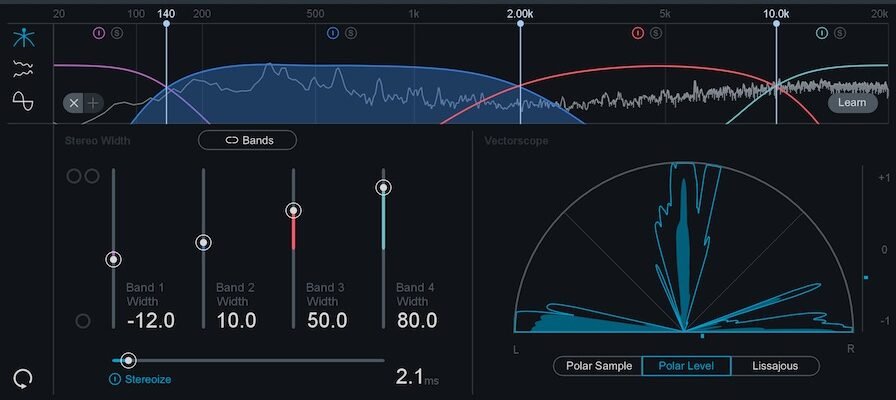
Low frequencies should almost always be mono.
Stereo sub bass can cause phase cancellation and weaken your low end. If you are curious about more details regarding the subject of phase cancellation, you can check out this article:
Phase Issues
The best approach is to split your bass:
- A mono sub bass below roughly 100–120 Hz
- A mid bass above that, which can be wide and stereo
This gives you both power and width without technical problems.
Processing Bass for Weight and Character
If your bass feels thin, saturation is often the answer.
Subtle distortion adds harmonics and makes bass sound fuller on smaller speakers.
You can also add a small amount of reverb or delay to the mid bass only. Always filter out low frequencies on reverb sends to keep the mix clean.
Final Thoughts
Picking the perfect bass is about intention.
Decide on the vibe, choose the right bass category, audition sounds in context, and keep your low end controlled.
Do this consistently, and your tracks will immediately sound more professional.
Want to Take Your Music to the Next Level?
That’s exactly what we help producers with in the EDM Tips Accelerator Program.
It’s our high-level coaching program designed to help producers like you finish professional-quality tracks faster — with personal feedback, expert guidance, and a proven system used by students who are now releasing on top labels and touring the world, accruing hundreds of millions of streams with their music.
